Jean Michel Jarre Virtual Show Opens New Worlds With Help From Jvan Morandi and ChamSys
PARIS –There is an unmistakable sense of boldness, perhaps even bravado, betrayed by a name like “Welcome To The Other Side.” In choosing this title, the author of a work is promising a transformative experience, one that will liberate the imagination of all who partake of it. In the case of electronic music pioneer Jean Michel Jarre, this confidence is well-founded — a promise kept!
Released on New Year’s Eve, Jarre’s Virtual Reality show is a mind-expanding experience that garnered 900,000 views on YouTube within a week of its release and, according to Sony Music International, over 75 million views on all outlets (Facebook, VRC, Weibo, Tik Tok). Defying all expectations, his creation swirls high-tech sights and sounds around a reimagined (and virtual) nine-centuries-old Notre Dame cathedral.
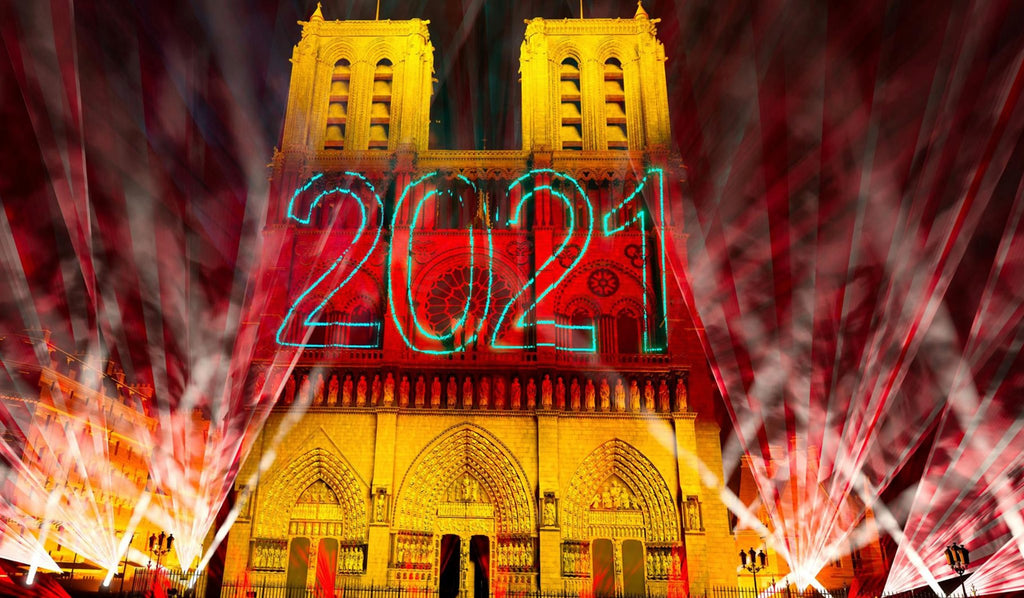
During its 55-minute run time, conceived to celebrate the arrival of 2021 in the French capital, animated geometric forms rise and fall within the historic church’s nave, keyboard instruments melt with color, brilliant light patterns run up stone columns to play off stained glass windows… all turning common perceptions on their head, so the viewer can come out “on the other side.”
Moving seamlessly with Jarre’s music in Welcome To The Other Side is a multifarious lightshow created by Jvan Morandi of Placing Shadows using his ChamSys MagicQ MQ80 console as the starting point to merge show business with game engine workflows. Run along triggered timelines within the Unity game engine, the lightshow is divided into two parts: interior stage element and architecture: sequences created via the ChamSys but then run directly by the Unity engine a series of exterior architectural sequences, involving lights and lasers aa well as camera moves played back via the lighting desk thought ArtNet and software.
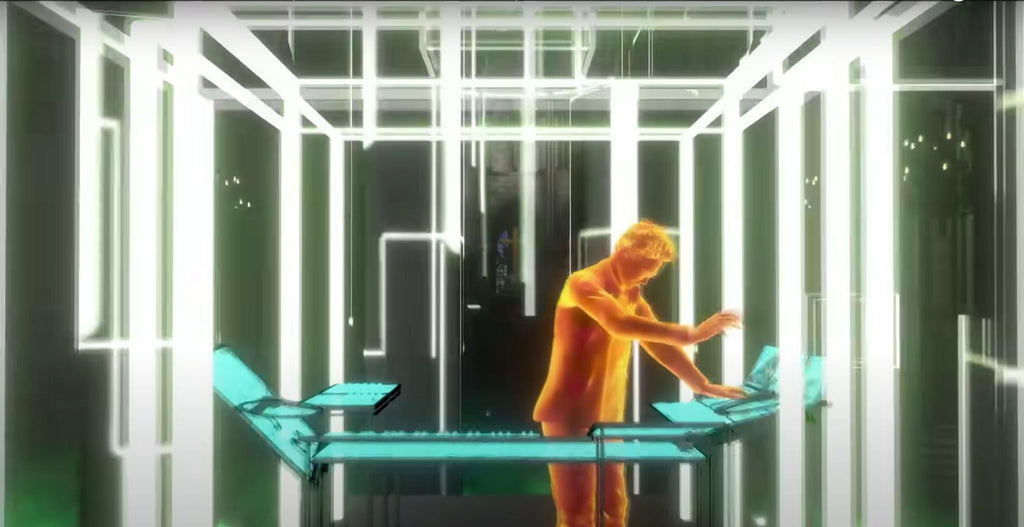 “We programmed the cues with a ChamSys MQ80 in my studio,” notes Morandi. “All the cue lists come from ChamSys and were translated into a set of Unity animation triggers on a timeline. When I say ‘translated,’ I mean that Victor Pukhov used the visualized lighting cues to create shader animation that then got triggered by Unity custom scripts by Antony Vitillo.
Morandi credits his MQ80 with helping this process go smoothly. “The Copy linked features in the ChamSys console were very useful, as was the Off-Set patch,” he said. “With so many camera shots on the outside I needed to dress the shot and fill it differently depending on the situation. Also, the ability to link my desk directly to my software and transfer data between the two, (they patch automatically in ChamSys) was a big help in creating the shots quickly.”
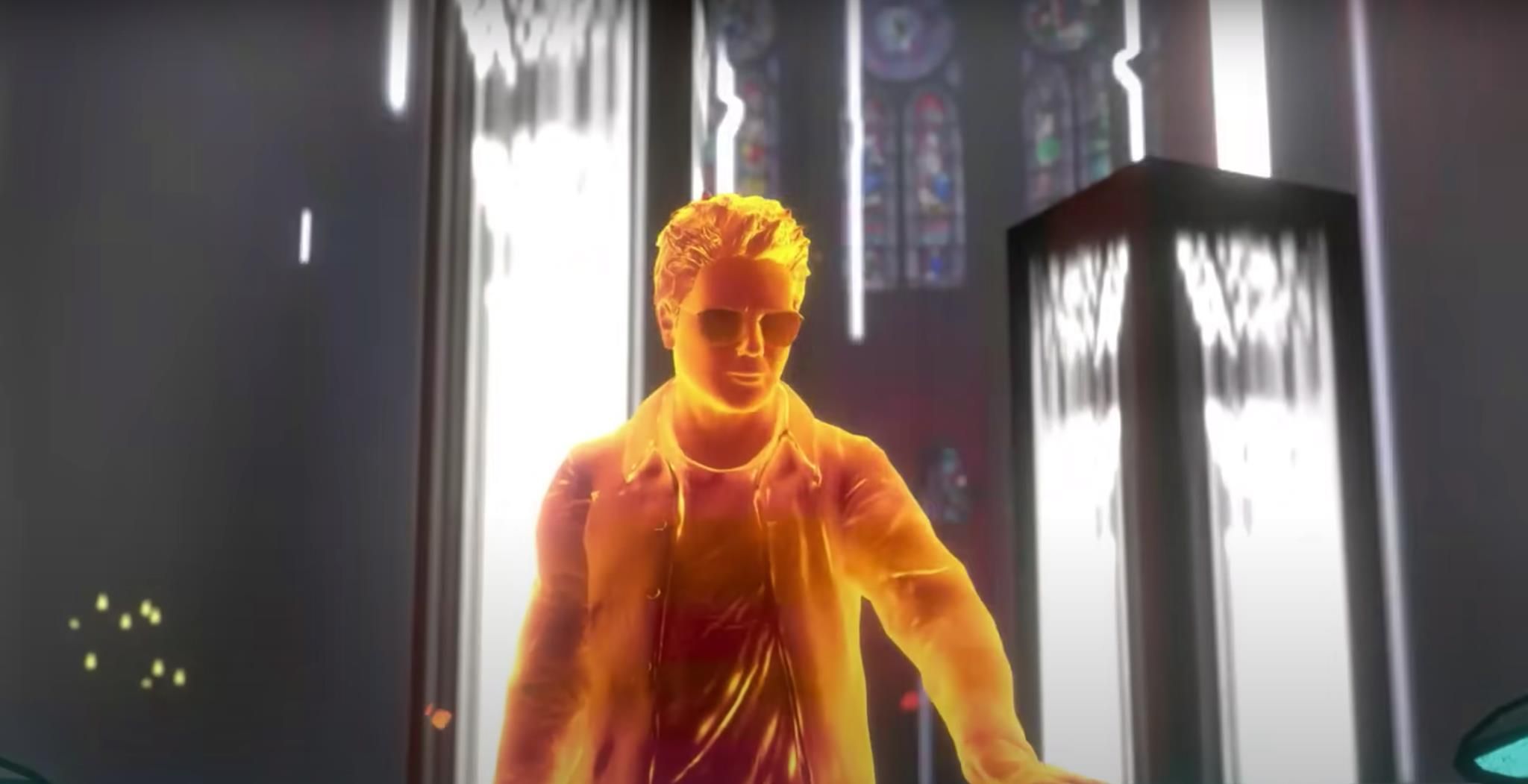
During the show, Jarre played live from TV Studio Gabriel in Paris. He was lit only by a video projector and portrayed in vivid colors and shapes coming directly from the same video content that was UV mapped on the inside of the virtual cathedral. Lending another evocative touch to the show was the virtual rendition of Notre Dame’s interior. The 3D model and the game engine programming were optimized by Lapo Germasi and Victor Pukhov of Manifattura Italiana Design. “Once we received the interior of the cathedral, we worked with our studio software and the game engine to find the right looks,” explained Morandi.
When designing the stage set in the middle of the church, Morandi envisioned a “modern version of Stonehenge.” He viewed the circular stage as a reflection of the shape of the big stained- glass window at the front of the cathedral. The stage columns that animated the scene were video mapped and received streamed content from a cue list on Vimeo.
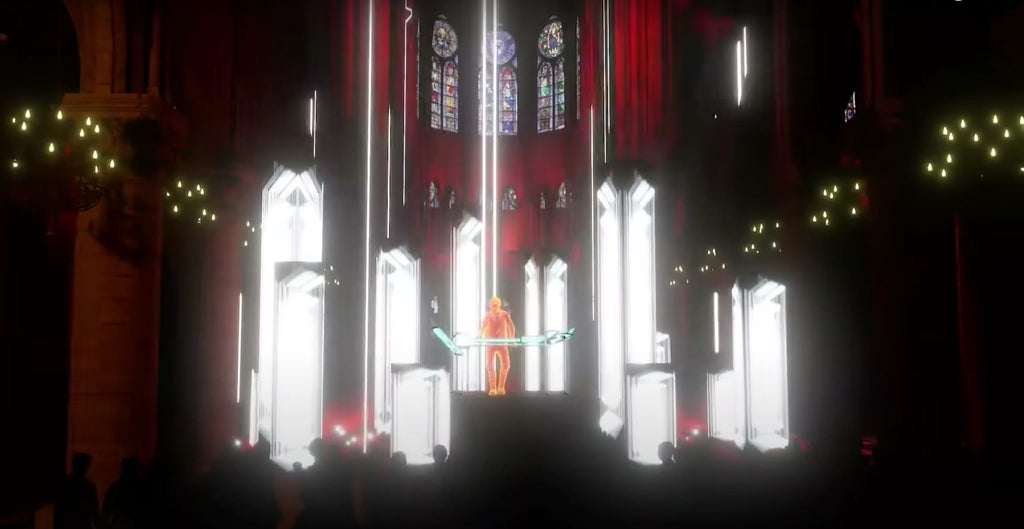 “The stage lights are actually not real light but volumetric shaders that were animated by Victor Pukhov to mimic my ChamSys programmed lighting cues,” said Morandi. “Most importantly, Vincent Masson created the 3D animations that made the show look stunning. He used our 2D content as starting point, and with a lot of passion and talent created the 3D versions of it.”
Collaboration was critical to making this VR creation come to fruition. “This project involved a great many very creative people coming together from diverse backgrounds, starting with Jean Michel Jarre whose vision and hard work made it all possible,” said Morandi. “Credit should also go to Louis Caracciolo from VRroom, our French VR Producer; and Antony Vitillo of NTW (Italian developers that looked after all the scripting and game engine functionalities). Jonathan Klahr did an amazing job on the 2D video content mapped onto the interior walls. Stephan and Jeroen from LaserImage of Amsterdam programmed the initial laser sequences. Georgy Molotsdov, Maud Clavier, David Montagne (global tv broadcast) did a great job filming the show all in VR.”
Exemplifying the scope of the project, one camera director was in Moscow (Georgy Molotsdov), while another was in Paris (Maud Clavier). Each of them controlled up to eight remote VR cameras and drones. Filming of this live VR gig was completely in VR within the VRchat platform, an accomplishment that would have been unimaginable not that long ago, but one that will become commonplace not that far into the future, according to Morandi.
“Once we have tested and solved various technological issues, I see tours in the future travelling with a VR/AR component in the crew,” he said. “Each show will be attended by real audience as well as VR/AR audiences. It will be just another way to enjoy entertainment.”
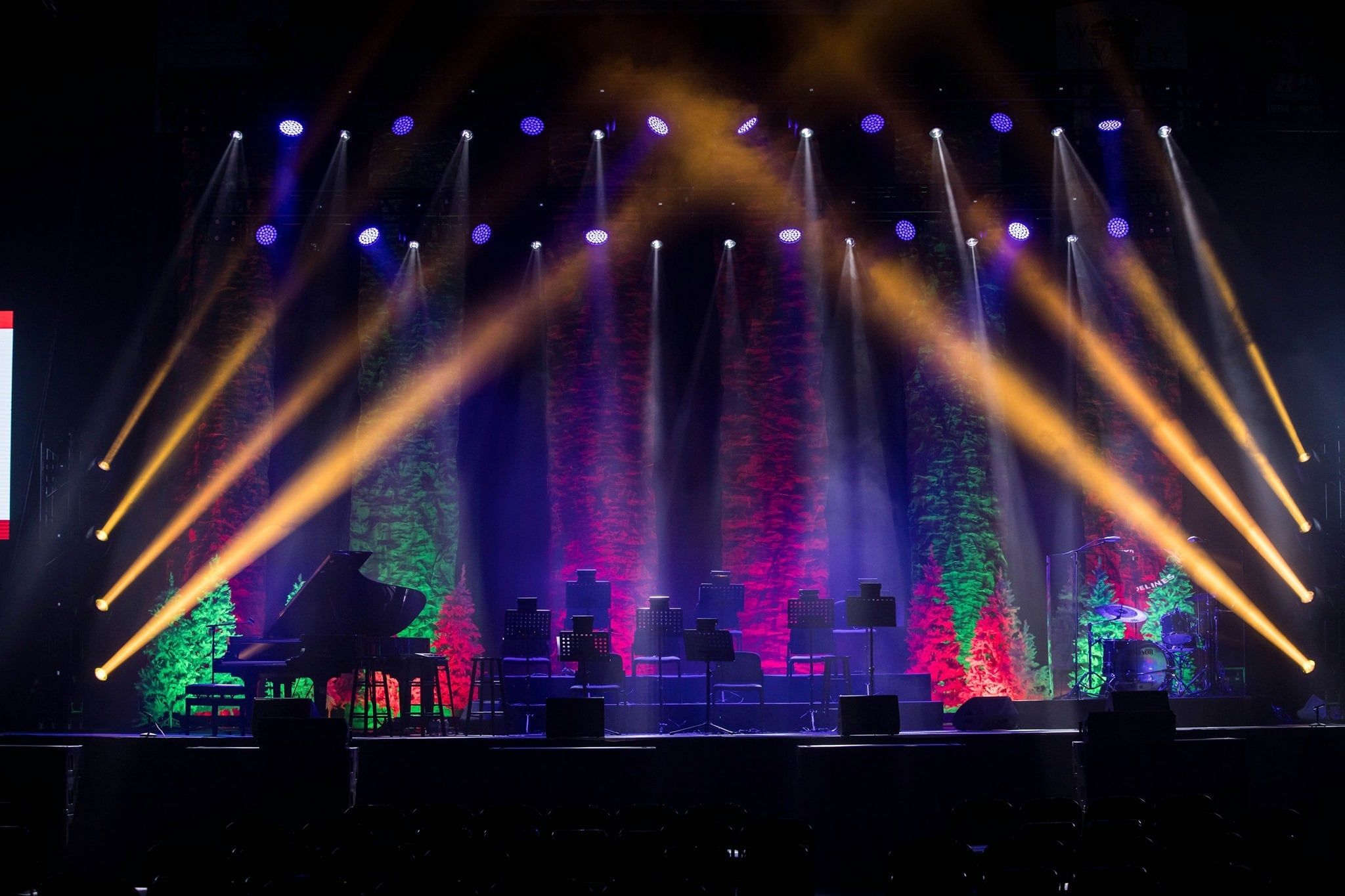
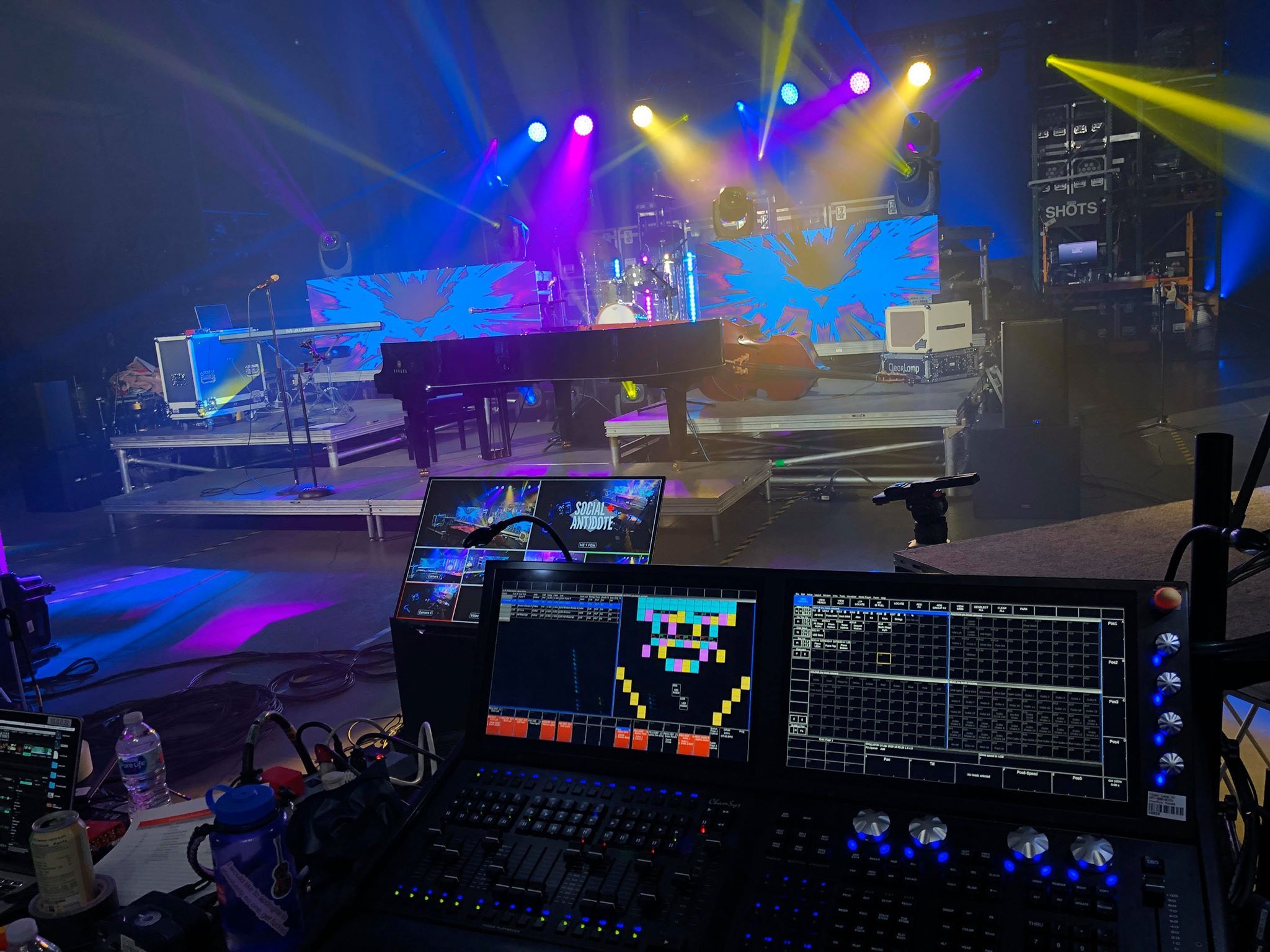
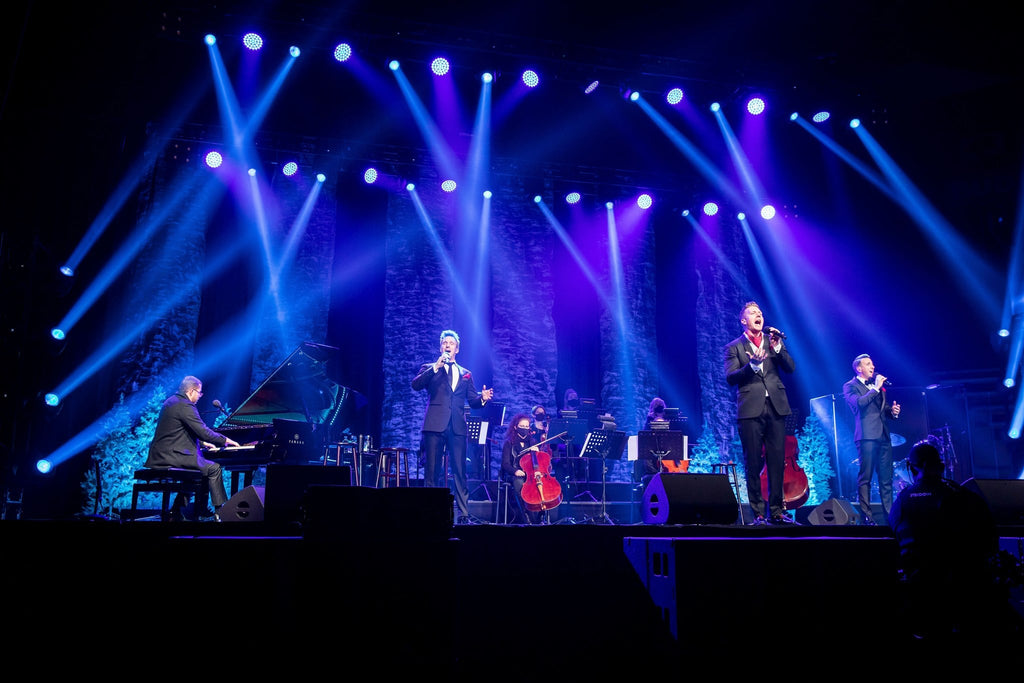 Their sound can also inspire an uplifting lighting design — even on short notice. This was plain to see at the trio’s recent socially distant livestreamed concert at Salt Lake City’s Maverik Center, where Nicolas “Murph” Murphy supported their evocative cinematic-like performance with an artful blend of bold light and shadows.
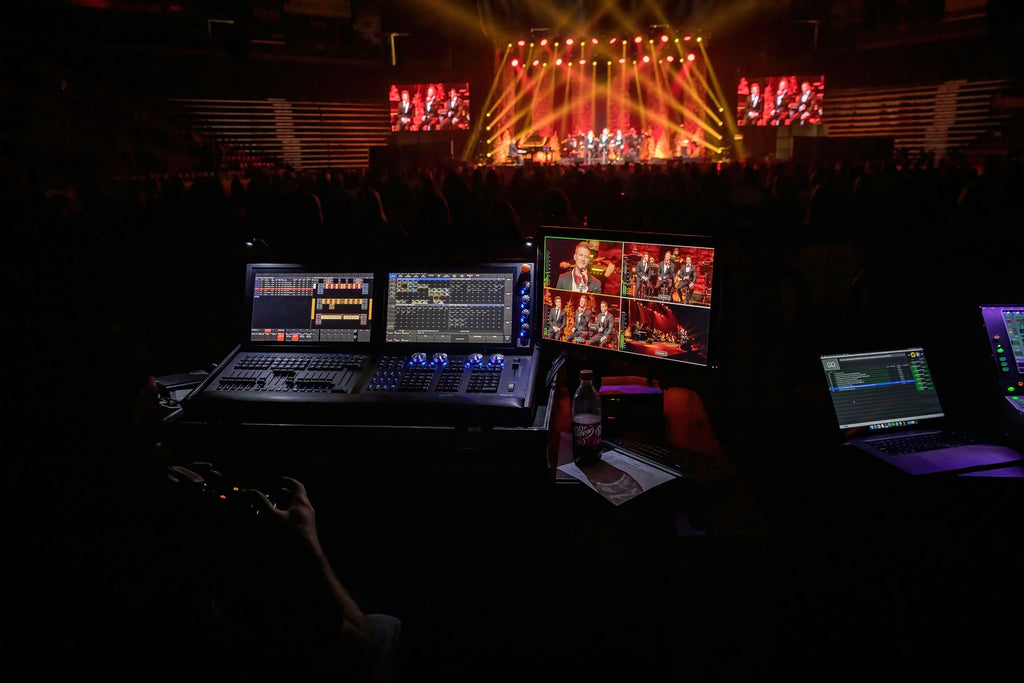 “The group’s production manager is an old high school friend of mine,” he said. “I was able to get a recording of every song they planned to perform. I tend to listen to the track a few times and then program out what I visualized in my head. Kind of my normal process when I am afforded the time. Due to our limited time available in the venue, I pre-programmed everything in MagicVis at my house in less than a day, something I was able to do, because it’s so easy to work with this software.”
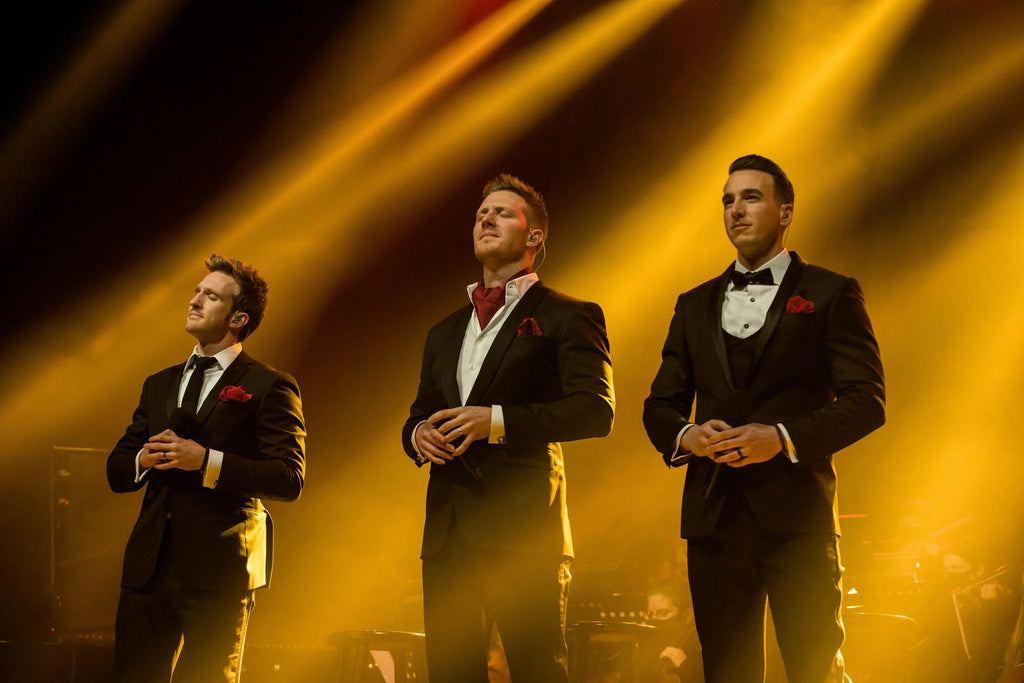 The stunning looks created for this show also translated well onto photographs. A “bonus” in this concert, notes Murphy was that his design was photographed by Leavitt Wells.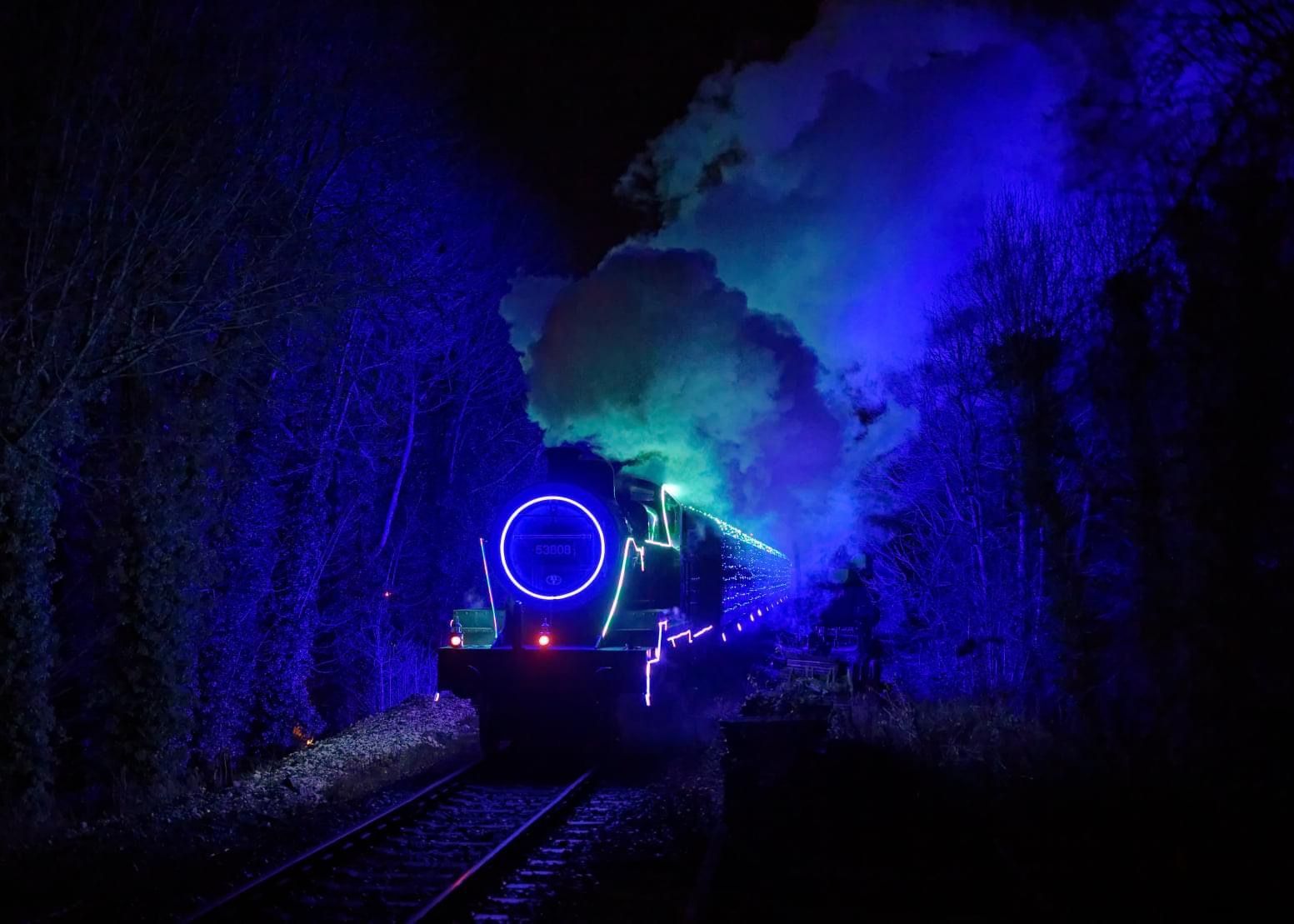
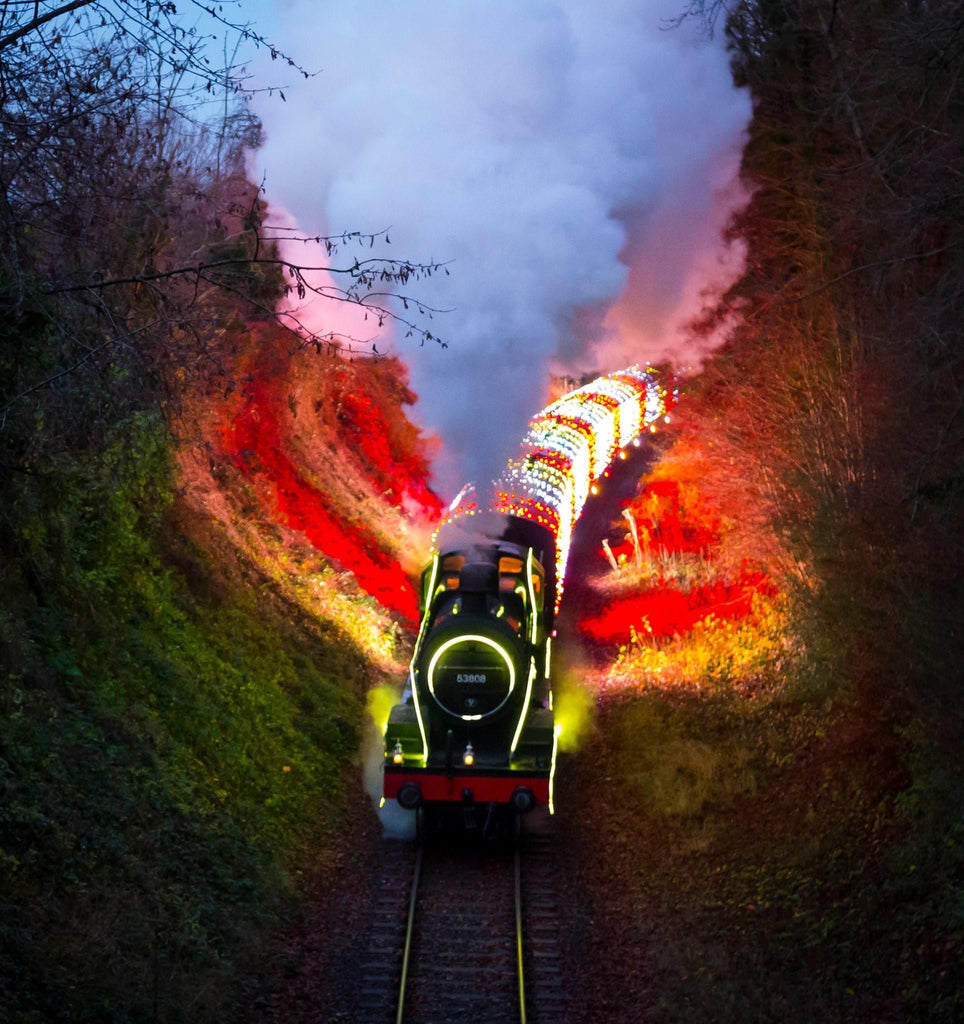
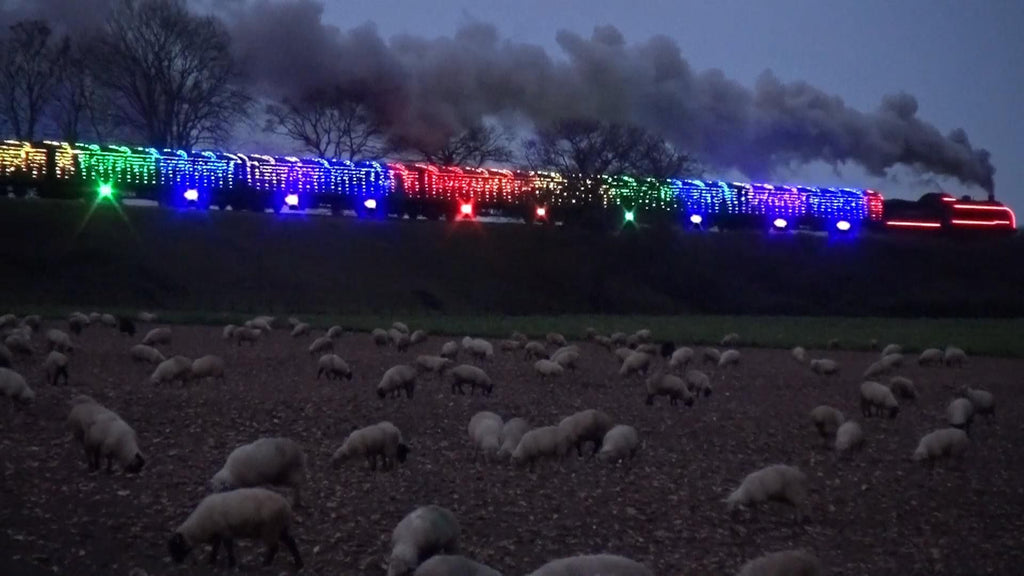 Given the size and scope of this lightshow, the channel capacity of the MQ500M was another important benefit for Horn. “At 78 Universes and with limited space on the train for control gear, my console was a life saver, because it handled everything with no need for any racks of external processing.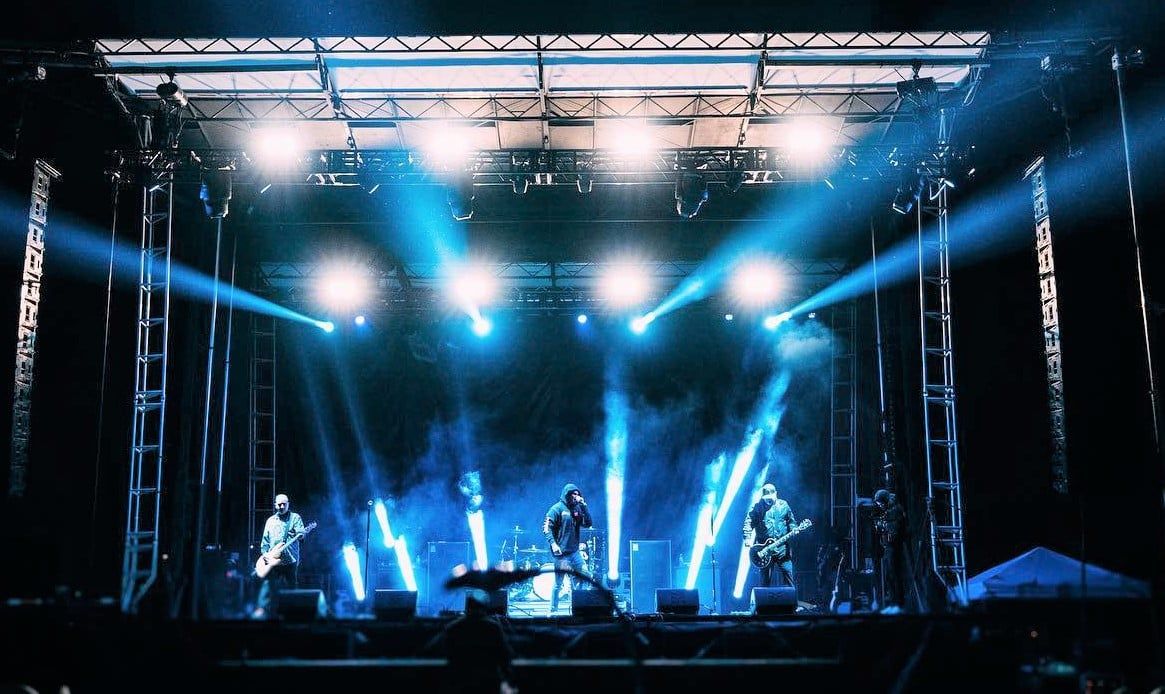
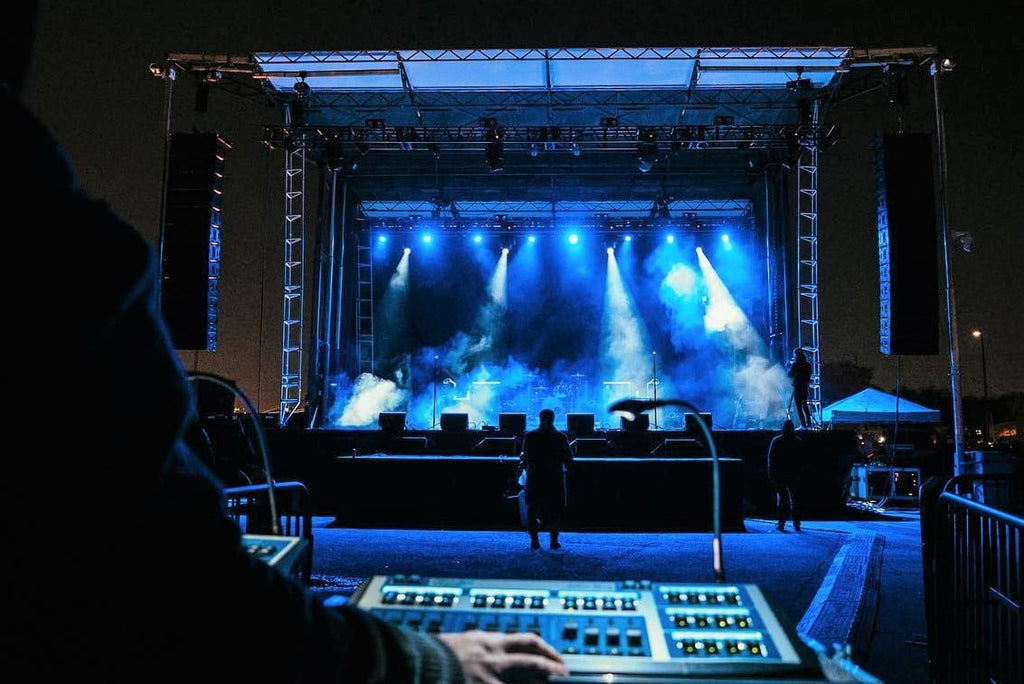 Scott’s plan may have seemed simple, but there was a complicating factor: he was given only 48-hours-notice that he would be LD for the show. To make matters even more problematic, he also had to light two other bands on the second night of the holiday show, along with providing supplemental lighting at the start and conclusion of the movies that were shown each night.
 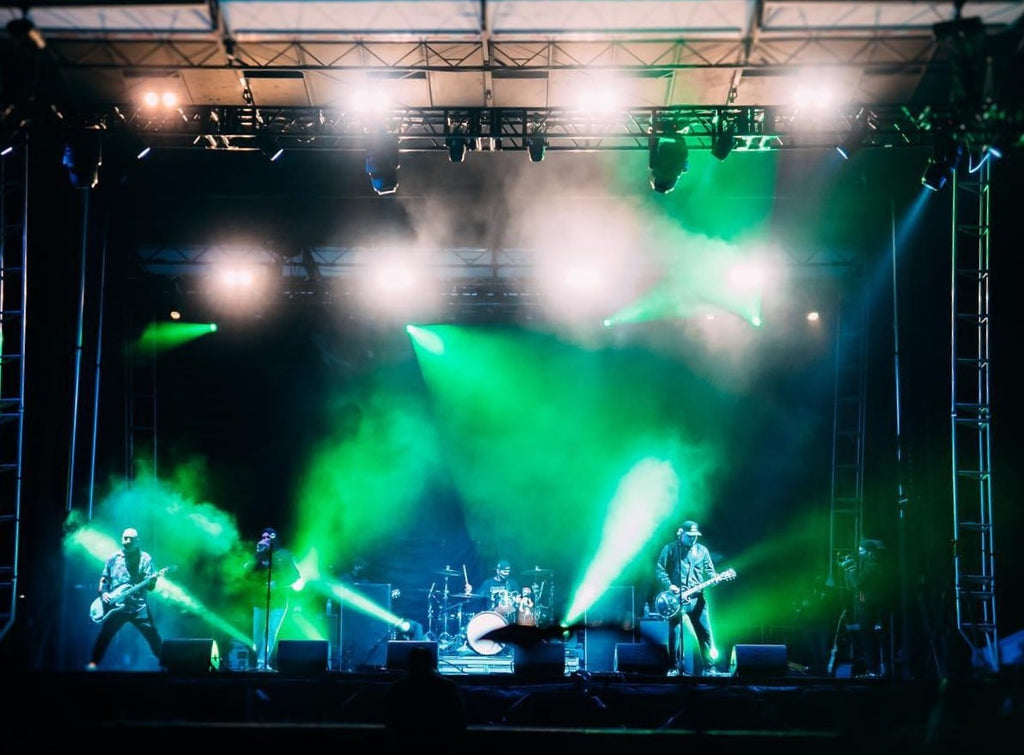 “Being able to take my desk on the stage deck to do my DS focus without having to ask a tech to assist with moving it made my days a lot easier,” said Scott. “I never fail to be amazed at how something so compact can be so easy to work with in real time at a show. Things like the eight Encoder Wheels put so much at your fingertips.”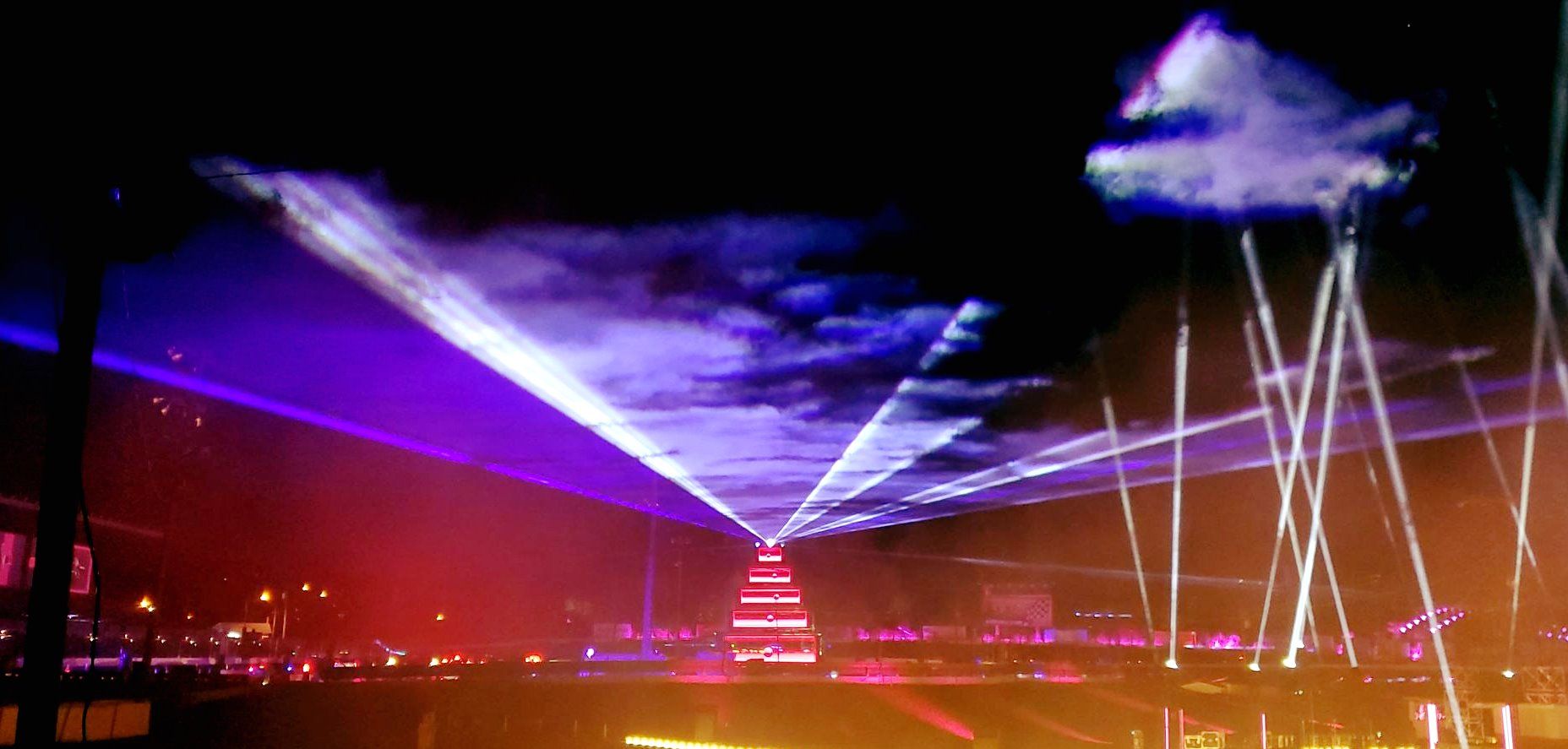
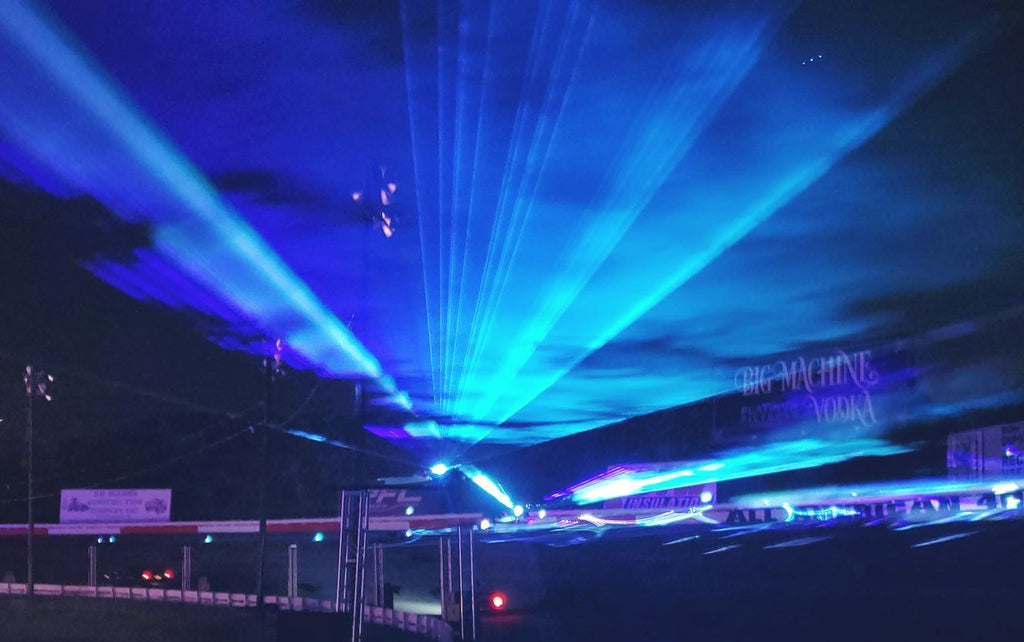 Dustin L Derry programmed and ran the laser show on his ChamSys
  Describing the MQ500 as “the workhorse” of his 24-universe (one for each laser) show, Derry recounted its role in his work. “I used the MQ500 along with X-Laser Mercury for programming the show in my home studio, and the interface between the two was perfect,” he said. “MagicQ was the primary ‘brain’ in my entire show.
 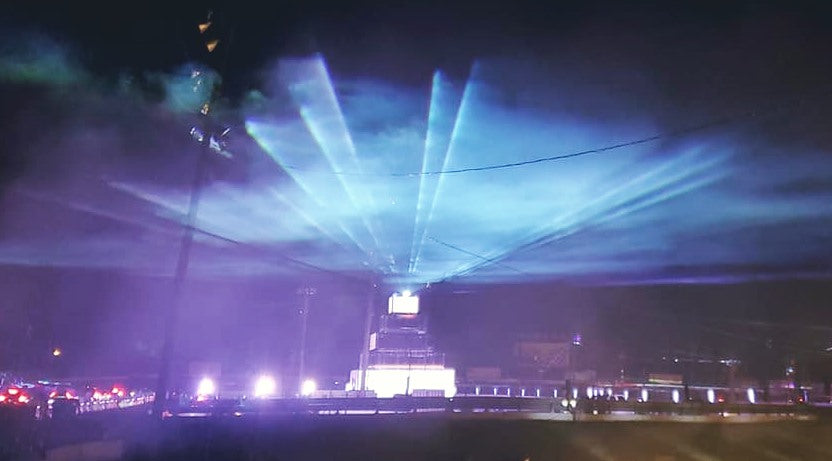 In addition to his main console, Derry had a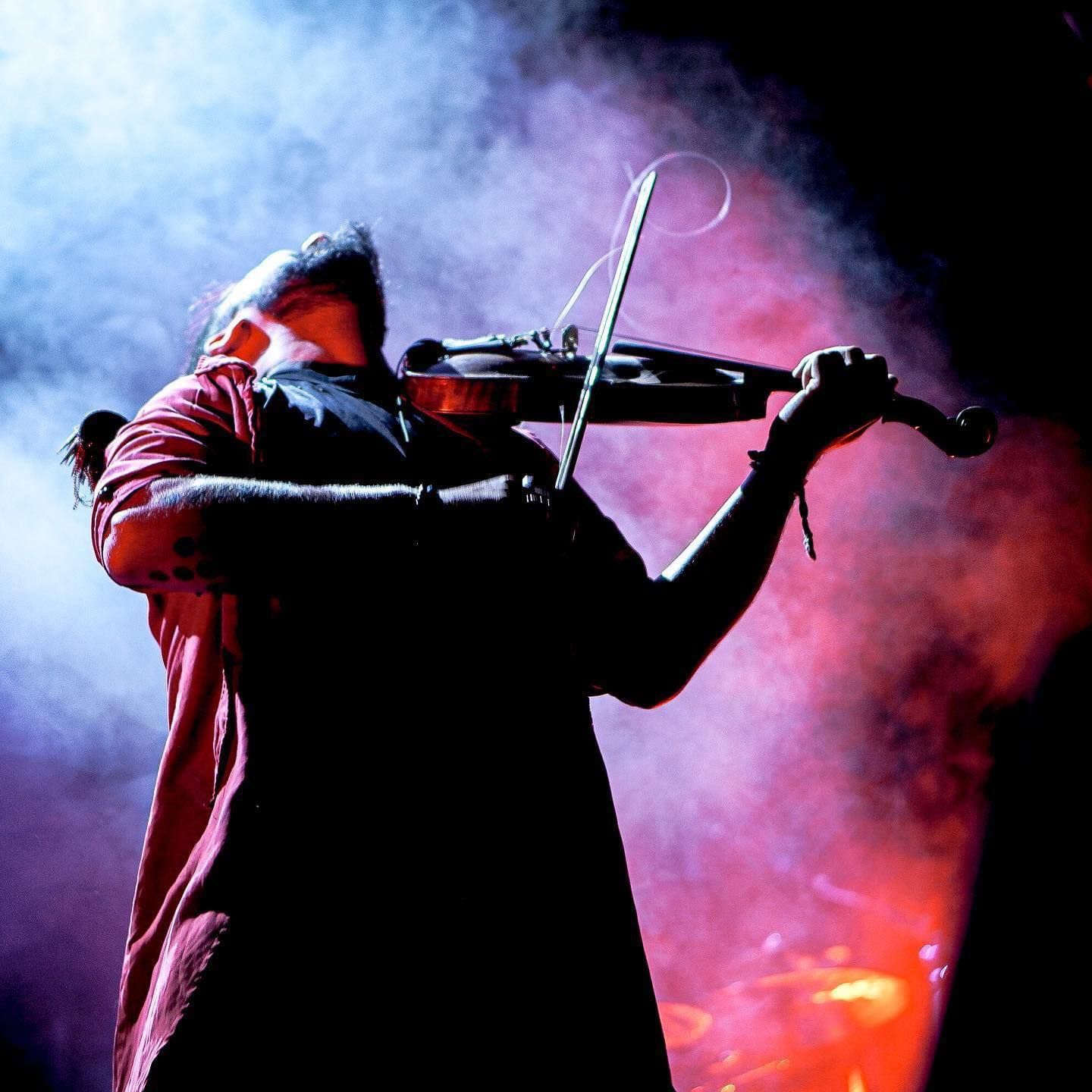
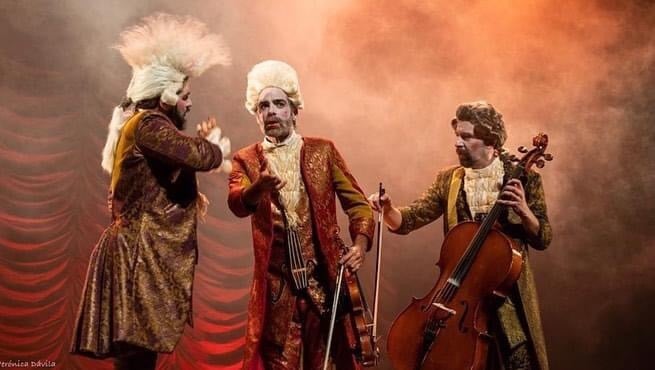 A longtime ChamSys user, Berzosa programmed his show on a MagicQ with a PCWing. He is running the show at venues throughout Spain on his
 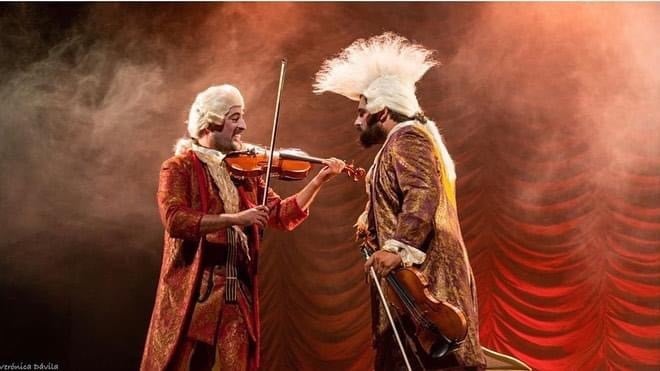 “The Plan View Grids in the output window that allow you to have multiple Grid Plan Views to divide up a lighting grid views are very useful when you have so many elements in your show,” said Berzosa. “It is easy for me to simplify things by using the buttons and encoders to change brightness levels and colors for fixtures by groups, especially since I had so many things going on. Also, having the faders and encoders arranged around the touchscreen is very convenient.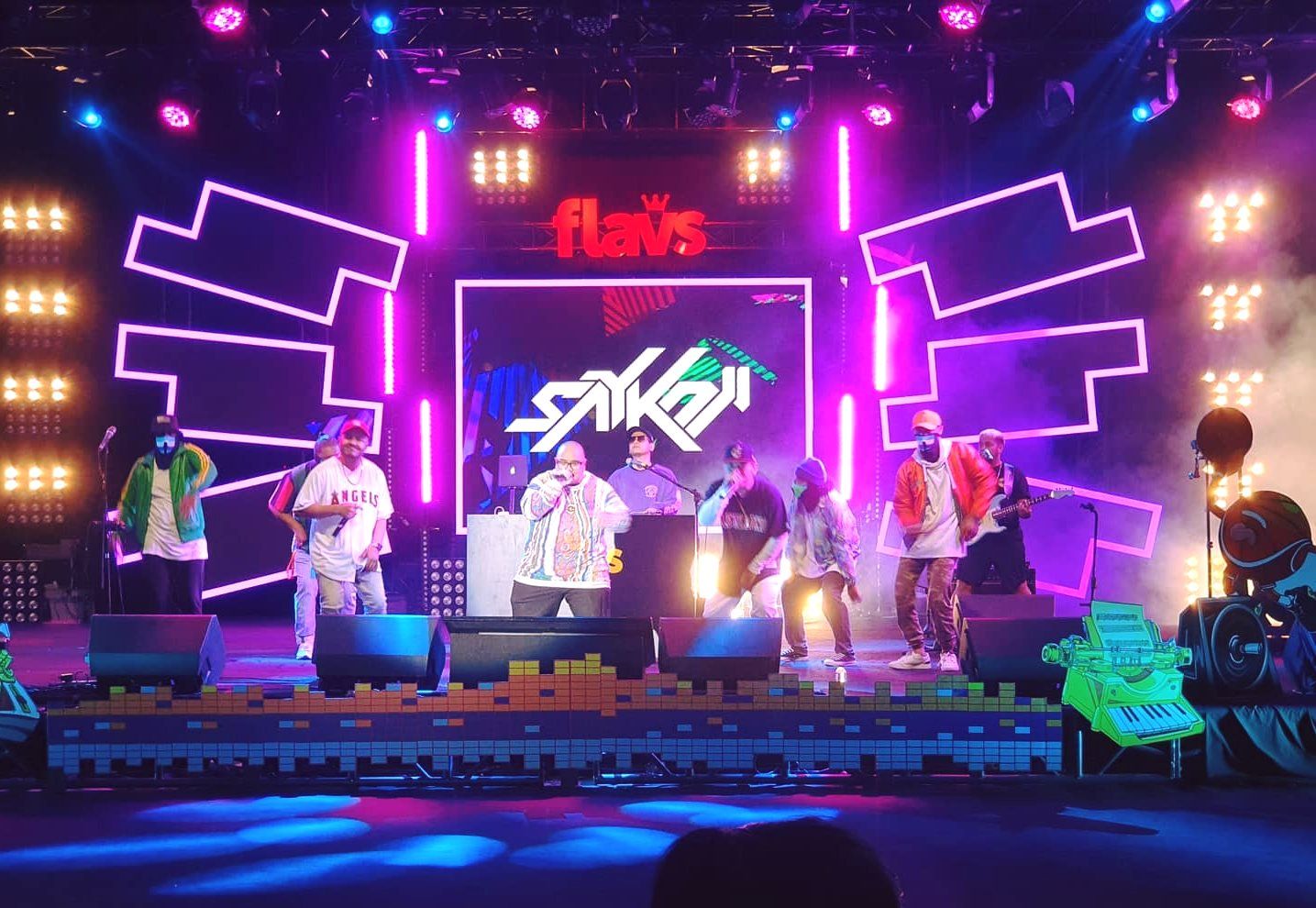
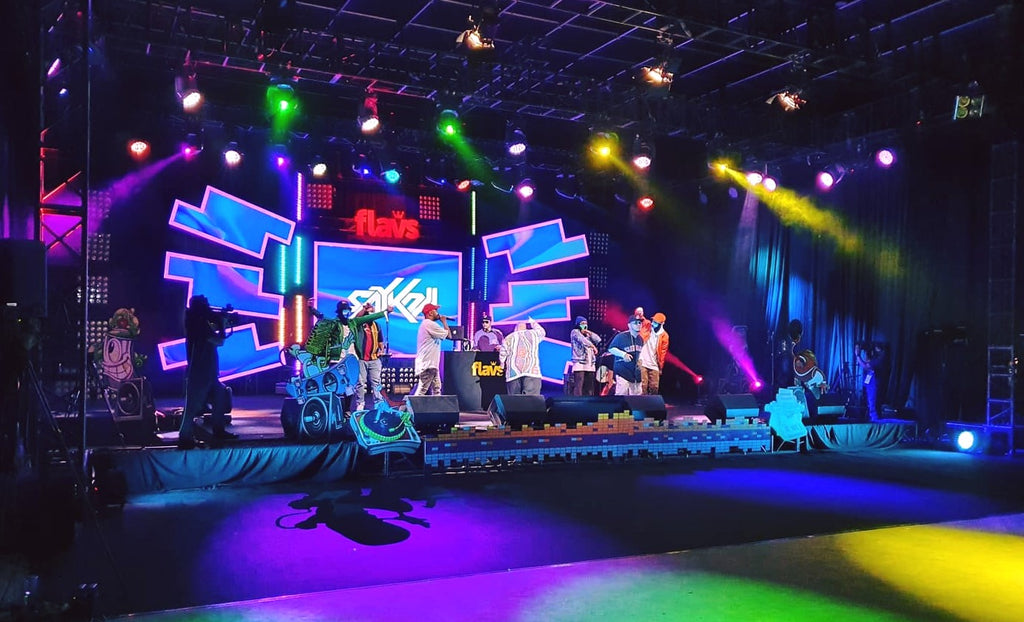 As so often has happened when creative spirits have been challenged by this pandemic, those involved in FLAVS came roaring back with a fierce burning intensity that blew away any disappointment. The 40 artists who appeared at the festival created a tight, nonstop torrent of raw unapologetically passionate sound, leaving those who paid Rp 99,000 (US$6.99) for a virtual day pass with the feeling that their money was well-spent.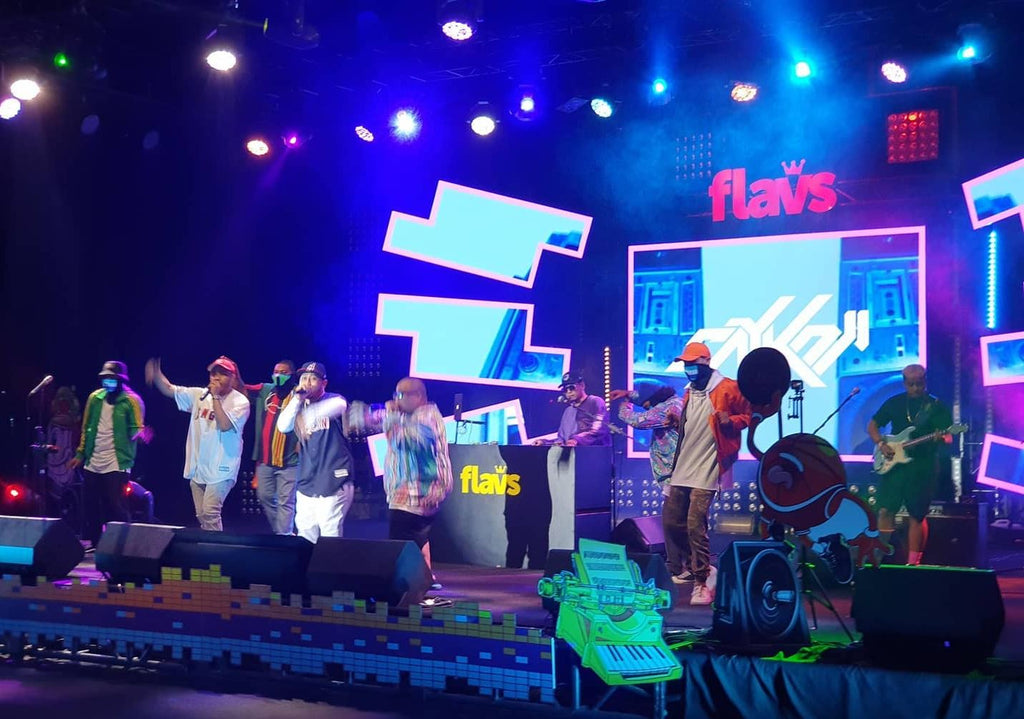

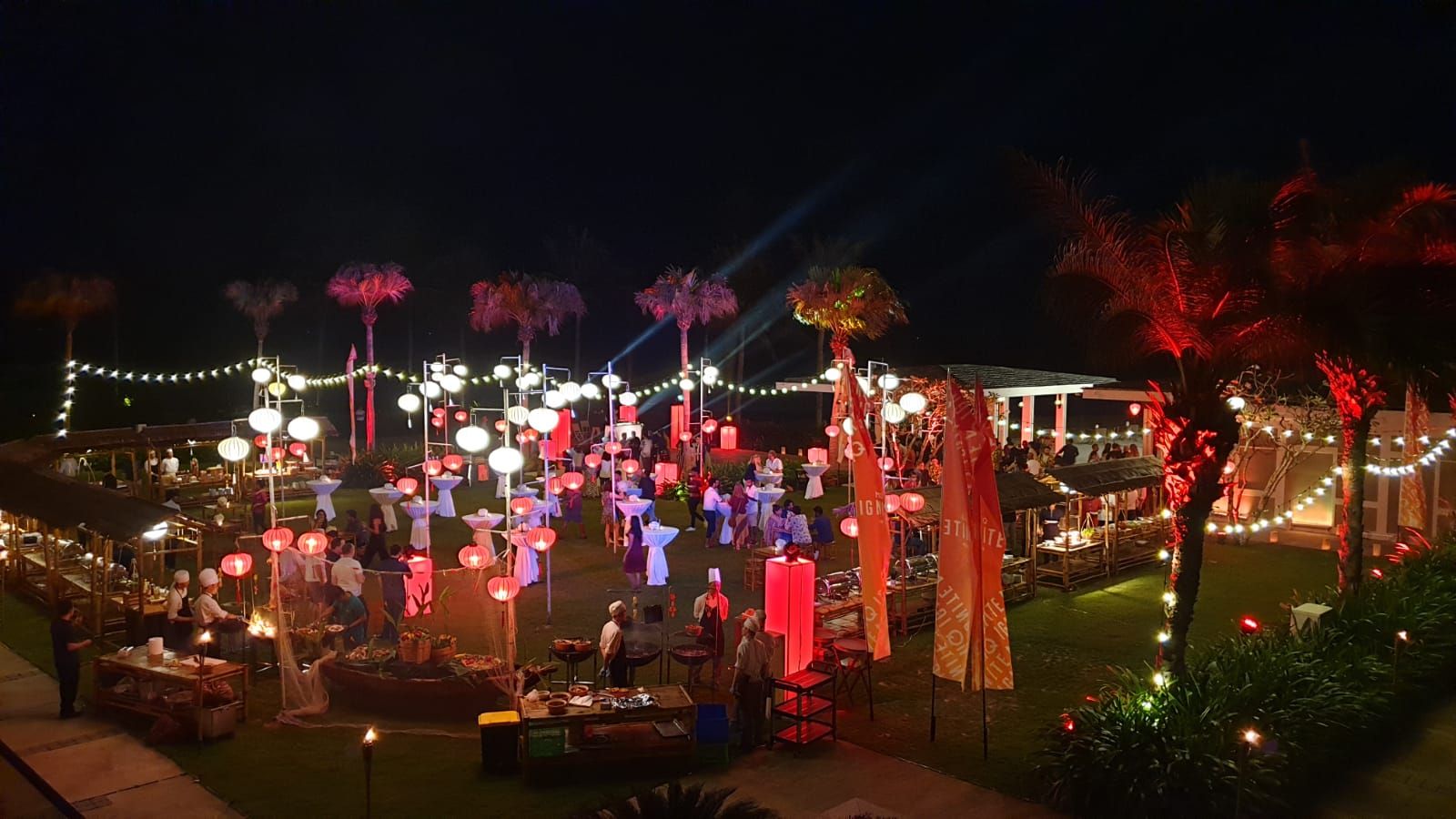
 Dimitriadis arranged some of the fixtures in his rig on five totems behind the DJ booth, spacing them out to preserve the sea view. Other fixtures were positioned on overhead hang points as well as on each side of the booth. This allowed him to hit the DJ and the widely separated tables on what would normally be the dancefloor with an immersive web of light from every direction.


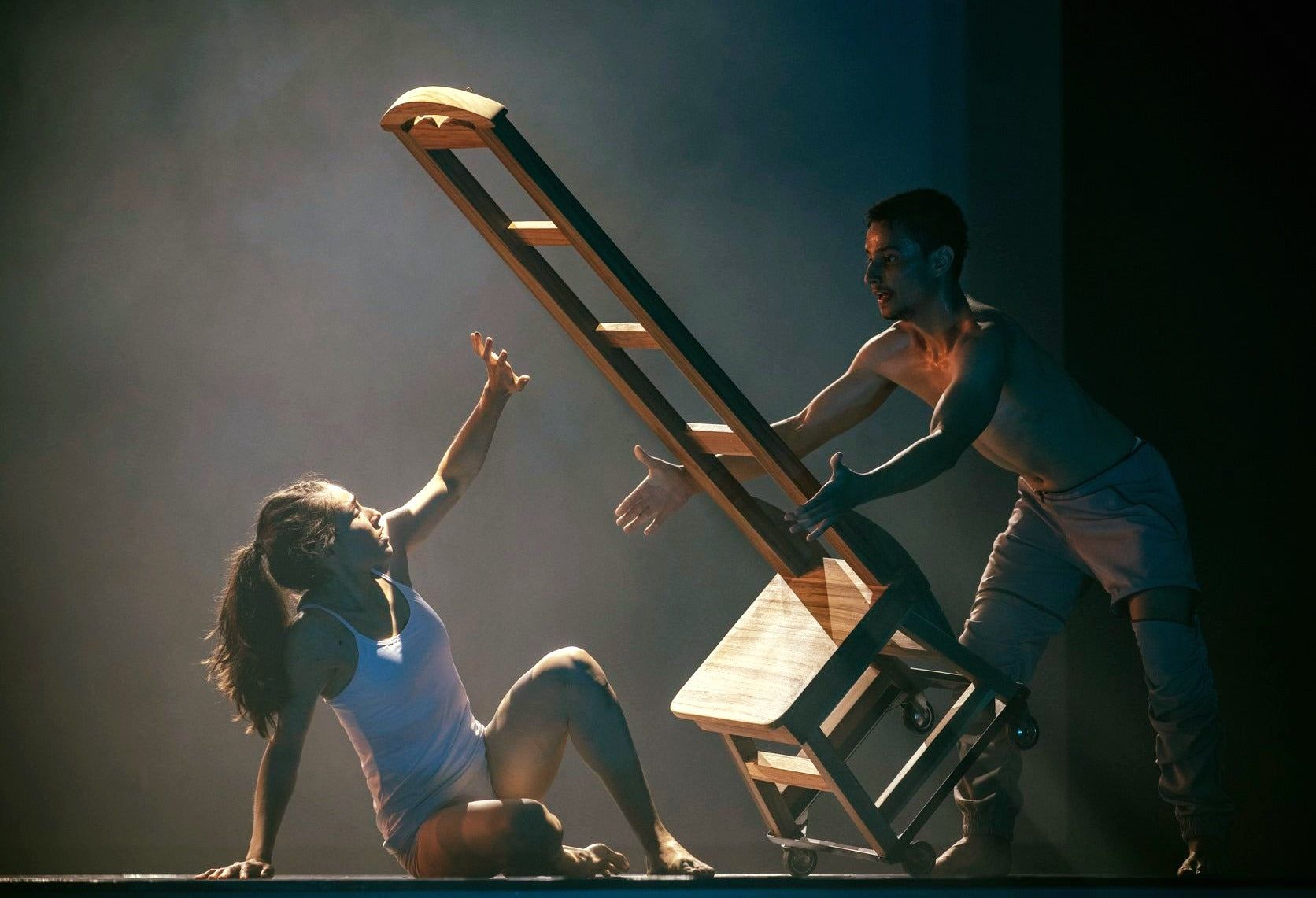
 Taking place at the Universidad Nacional de Costa Rica School of Dance in late 2019, the production won the national Mireya Barboza 2019 award for best designed dance show in February. It captivates audiences by presenting a series of stories built around its central them.
 “In a production such as this one, where there were so many components and so many changes of scene, it was very important to have a smooth workflow,” said Piedra. “The ChamSys console aligned with my creative process. This was fantastic, because it let me focus on what is truly important, telling the story and creating the right visuals.






 These considerations led them to pack two


 Although purely virtual and not good for admittance to any show, each tour pass is customized for Murph’s friends, with their name, as well as job title, which is some form of “House Integration Specialist.”
 Murph is gratified that his “world tour” is making a difference in the lives of people close to home. He’s also grateful that it gives him the opportunity to work his console. “I have been touring with a MQ500 since 2017, right when they came to the United States,” he said. “From what has been told to me, I was the second person in the States to take delivery of the MQ500 and the first to take one on a North American Tour.”